Brand: AEG
Category: Sewing Machines
Document Type: Manual
Language: EN
Brand: AEG
Category: Sewing Machines
Document Type: Manual
Language: EN
Uploaded: April 20, 2026, 8:13 p.m.
24 months warranty for material or manufacturing defects.
Getting Started:
1. Connect the machine to the power supply and turn it on.
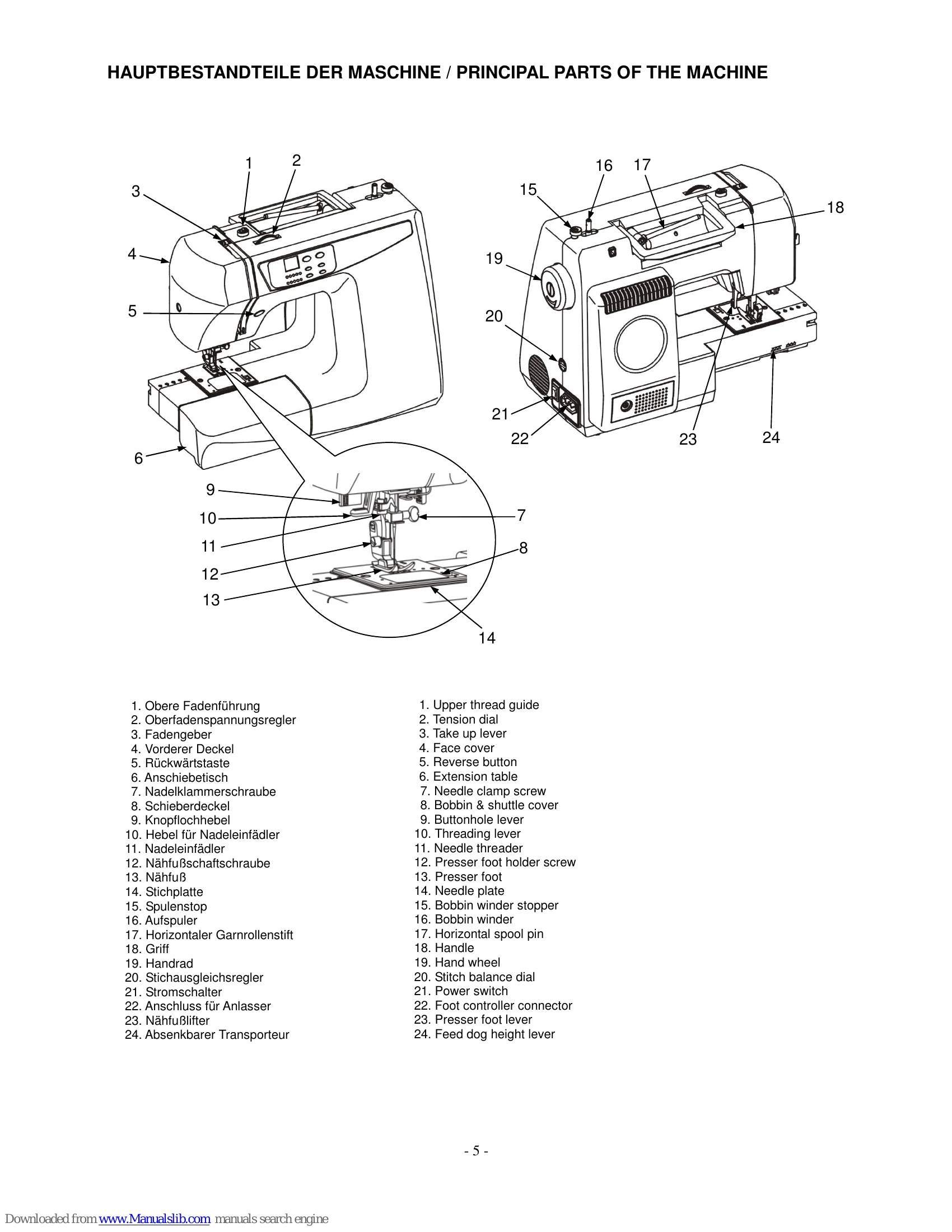
2. Thread the upper and lower threads according to the instructions.
3. Place the spool of thread on the pin and wind the bobbin.
4. Insert the needle and presser foot.
Operation:
1. Place the fabric under the presser foot.
2. Select the desired stitch and stitch length/width.
3. Control the sewing speed with the foot controller.
4. Use the reverse button for backstitching.
Maintenance:
1. Clean and oil the machine after use.
2. Regularly check and replace the needle and presser foot as needed.
| Problem | Probable cause | Possible easy correction |
| Threads kink together under the fabric. | Upper thread improper threading. Upper tension dial at O position. | Re-thread. See page 14. Increase upper thread tension. See page 17. |
| Irregular stitches | Incorrect size needle. Improper threading. Loosen top thread tension. Pulling fabric. Loose presser foot. | Choose correct size needle. Re-thread. See page 14. Tighten top tension. See page 17. Gently lead the fabric. Re-set presser foot. |
| Breaking needle | Uneven wound bobbin. Needle plate broken. Wrong needle size for the fabric. Bent or blunt needle. Pulling fabric. The needle clamp screw is loose. The pattern dial is rotated when needle is in fabric. | Re-wind bobbin. See page 10, 11. Change needle plate. Choose a needle to suit the thread and fabric. Re-set needle. See page 8. Gently pull the fabric. Tighten the needle clamp screw. Bring needle to its highest position before your choose a pattern. |
| Bunching of thread | Loose presser foot. Upper and lower threads are not pulled back under presser foot before starting seam. | Re-set presser foot. Pull both threads under and back of presser foot, then rotate the hand wheel with right hand. |
| Puckering | Incorrect thread tension. Upper thread improper threading. Using two different sizes or type of thread. Bent or blunt needle. Loose presser foot. Fabric too thin or too soft. | Re-set thread tension. See page 17. Re-thread. See page 14. Use same size and type threads. Insert new needle. Re-set presser foot. Use underlay or vlies. |
| Skipping stitches | Wrong needle size. Bent or blunt needle. Incorrect setting of needle. Improper threading. Starting to stitch too fast. | Choose correct size needle for thread and fabric. See page 19. Insert new needle. Re-set needle. See page 8. Re-thread. See page 14. Start to stitch at a medium speed. |
| Breaking upper thread | Improper threading. Top thread tension too high. Incorrect setting of needle. Wrong needles and thread for the fabric. Set thread pool and the position indentation at left side. | Re-thread. See page 14. Adjust top thread tension. See page 17. Re-set needle. See page 8. Choose correct needle and thread to suit the fabric. See page 19. Adjust position of the indentation to right side. |
| Breaking bobbin thread | Incorrect setting of bobbin case. Needle eye is sharp. Burrs on bobbin. Burrs on needle hole. Down thread improper threading. Down thread tension too high. Lint in bobbin or shuttle. | Re-set bobbin case. See page 34. Replace new needle. Sand or change bobbin case. Insert needle again. Re-thread. See page 12, 13. Adjust thread tension. See page 18. Clean bobbin case and shuttle. See page 34. |
| Fabric not moving | Stitch length in "O" position. Scraps in with feed-dog. Sewing thread entangled feed dog position down. Thread caught in shuttle. | Adjust stitch length. Clean feed dog. See page 34. Pull back upper and bobbin thread under of presser foot. Feed dog position up. Remove and clean shuttle. See page 34. |
| Machine jamming knocking noise | The machine is not plugged in. Machine is not switched on. | Plug in machine. Switch on machine. |
| Sewing machine doesn't operate | - Top thread tension too high. - Upper thread improper threading. - Down thread improper threading. | Adjust top thread tension. See page 17. Re-thread. See page 14. Re-thread. See page 12, 13. |
| Down thread is pulled above the cloth. | - Top thread tension too high. - Upper thread improper threading. - Down thread improper threading. | Adjust top thread tension. See page 17. Re-thread. See page 14. Re-thread. See page 12, 13. |